


Intensive winter grazing 2026
Top late-season winter grazing and cultivation tips:
The winter grazing season ends on 30 September, and with most winter paddocks grazed, it’s important to minimise stock movement over bare earth to protect your soil and prevent sedimentation and nutrient loss.
- Effluent management and compliance: We understand that managing effluent during these very wet conditions can be challenging. If the recent weather has caused your pond levels to reach full capacity and you are at risk of non-compliance, please take the best practicable option available to minimise environmental effects, document what you have done and why, and contact Environment Southland for further advice.
- Cultivation: Cultivation is a key activity on most farms and plays an essential role in preparing land for cropping or pasture renewal. However, if not carefully planned and managed, cultivation can lead to sediment and nutrient losses, which may negatively affect nearby waterways. Check the rules/guidelines and more information here.
- Plant a catch crop: Catch crops like oats do a great job at mopping up leftover nutrients in the soil before they can enter groundwater, and can make a useful source of feed or income come harvest time.
- Continue to manage your critical source areas: Make sure any critical source areas (CSAs) in your winter grazing paddocks are fenced off and not grazed, harvested, or cultivated.
- Continue to maintain buffers from waterways: Make sure you maintain your buffers to protect waterways.
- Back fence stock: Make sure to back fence stock off the land that has already been grazed to minimise pugging and damage to your soil. If you have grazed a CSA, you can mitigate any potential sediment or nutrient loss by placing a straw bale at the lowest point to act as a filter.
- Set up portable water troughs and shift your feeders: Shifting troughs and feeders will enable you to back-fence your paddock and avoid excessive pugging.
- Document your decisions: All the environmental risks you have identified this season should be documented in your winter grazing management plan in preparation for next season. It's useful to keep notes on how you carried out your plan, as well as any changes you made that could benefit you next season.
- Ensure self-feeding silage stacks are well maintained: Stacks need to sit on an impermeable base to prevent loss to groundwater. Ensure stacks are at least 50 metres from waterways, with no discharge directly to ground water or within 20 metres of a waterbody. In order to maintain quality and prevent wastage only two days’ worth at a time needed to be uncovered. Any waste should be regularly cleared from the grazing area to prevent it from being tramped back into the run-off area.
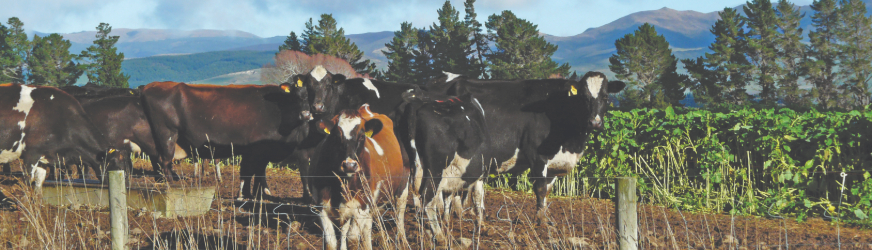
Well-planned winter grazing of stock helps reduce impacts on waterways and animal health. Farmers in Southland have made great progress with winter grazing actions and we want that to continue. Rules from the Southland Water and Land Plan may impact your ability to winter graze without a consent.
Compliance and monitoring approach
During the winter grazing season, our compliance approach is to support good environmental outcomes while providing clarity and consistency for landowners and industry partners.
This year, we are running two parallel processes when attending incidents or undertaking monitoring during the winter grazing period:
- Winter grazing compliance assessment, and
- Farm plan engagement and follow-up
Separating these workstreams enables us to have clearer reporting, more consistent decision‑making, and targeted support for landowners who are still progressing through their farm planning obligations.
Below is an example of what landowners can expect:
When officers attend a property in response to a winter grazing concern, they will:
- assess compliance with winter grazing rules and any winter grazing plan in place
- discuss the landowner’s progress toward developing and certifying their farm plan
- determine the appropriate next steps in line with the council’s enforcement policy.
Depending on the situation, landowners may receive:
- a phone call advising no breach was identified
- a request to complete or update their farm plan
- referral to the Farm Plan or Land Sustainability teams for support, or
- an investigation where breaches of winter grazing rules are identified
Cost recovery for winter grazing investigations will only apply where environmental impact is identified, or a second or subsequent breach occurs.
Support for farm plans
To encourage participation and help landowners get started, we have developed an advice letter that will be sent whenever farm plan gaps are identified. Our Farm Plan and Land Sustainability teams will then follow up directly to provide guidance. We appreciate the important role you play in supporting regulatory changes. If you have questions, please contact us at 0800 76 88 45 or click here for more information
Key things you need to know for winter 2026:
Buffer sizes for grazing
- A 20-metre buffer from the bed of a waterway on a slope of 10 degrees or more
- A 10-metre buffer from the bed of a waterway on a slope of 10 degrees or less
- A 20-metre buffer from any Regionally Significant Wetland
Critical source areas
- Critical source areas must not be cultivated or grazed
Southland Farm Plans
- Ensure you have a prepared Southland Farm Plan, as this is a requirement of winter grazing under the Southland Water and Land Plan.
If you’ve cultivated within these areas, reach out for advice on 0800 76 88 45.
Critical source area example:


Permitted activity and resource consents
You should be able to carry out winter grazing as a permitted activity for the 2026 season if it includes:
- Critical source areas are identified in your prepared Farm Environmental Management Plan. You must ensure livestock are kept out and no cultivation into forage crops occurs in these zones to protect water quality and soil health.
- Replant the land used for winter grazing as soon as possible after livestock have grazed the forage crop, promoting soil regeneration.
- The Farm Environmental Management Plan has been prepared and includes a winter grazing plan that implements downslope grazing or leaves a 20-metre ‘last-bite’ strip; uses back fencing to prevent stock from re-entering grazed areas; and provides transportable water troughs to minimise soil disturbance.
- No intensive winter grazing is carried out above 800 metres above sea level.
- The size of the land area used for intensive winter grazing must not increase beyond what was used in any one winter between 1 July 2014 to 30 June 2019.
Note: Intensive winter grazing buffers are twice the size of those required under the cultivation rule. You can find out more about cultivation here.
Do I need to have used the same paddock for IWG previously?
You need to have used land on the farm for intensive winter grazing from 1 July 2014 to 30 June 2019. It does not have to be the same paddock. You must not have increased the size of the area beyond what was used for intensive winter grazing in any one winter between 1 July 2014 to 30 June 2019.
If you are unsure about the rules, please check with us.
If you cannot meet the above requirements you will need a consent to winter graze in Southland, contact our consents team on 0800 76 88 45 to discuss.
- This pathway applies for winter grazing activities that are not a permitted activity
- You will need to complete the online consent form and Environment Southland will be to assess the application.
- Note: to apply for a resource consent online you will need to be a registered user with My Environment Southland. Not signed up with us? Click the ‘Log In’ button at the top of this page, and click ‘Sign up here’.
- Once logged in, you will be able to save your application form and come back to complete it later.
- Before starting, we recommend having this information to hand.
- Applicant details
- Site details
- Total hectares previously grazed
- Details of crop and stock types to be grazed
- Assessment of environmental effects (good management practices or mitigation options used on farm)
- Farm environmental management plan details
- Supporting documents. These can be uploaded within your application and may include maps, photos and plans
You can apply for a resource consent by clicking here , or you can download a pdf version of the form to complete here.
Winter grazing templates
Note: As these templates are developed by outside organisations they may not include all of the requirements for winter grazing in the region under the Southland Water and Land Plan.
Useful links
Tips on how to measure the slope of your paddock (video)
Read the Proposed Southland Water and Land Plan
Find out more about the National Environmental Standards for Freshwater
Find out more about the Essential Freshwater regulations here.
Check out our other useful consent advice factsheets
Find out more about the Southland Intensive Winter Grazing Advisory Group here.
Read DairyNZ's advice around wintering here.
Download the Ministry for Primary Industries intensive winter grazing plan template
Read Beef + Lamb New Zealand's guidance on preparing for winter grazing


