


One woman’s drive to make an ecological difference
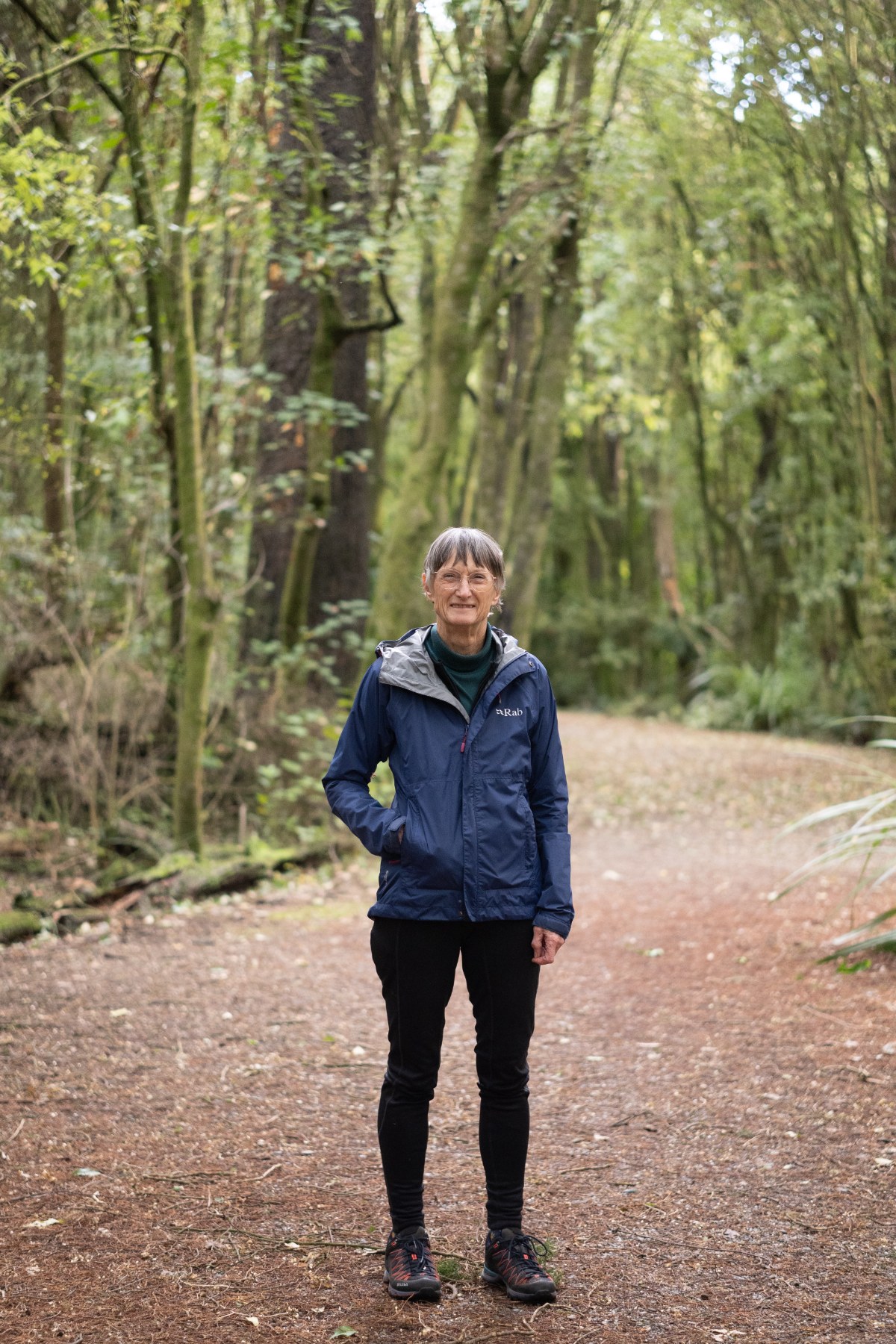
Not long after moving to Invercargill Judy Fotheringham was cycling through Thomsons Bush and noticed weeds and pest plants throughout the reserve.
It wasn’t in her nature to ignore it. Instead, she became the coordinator for the Friends of Thomsons Bush, a community group of volunteers interested in the ecological restoration of the remnant kahikatea forest.
Born and raised in Wallacetown, the middle child of five, Judy had an early introduction to biosecurity work. Her father worked as a possum hunter during the offseason at the freezing works.
“August school holidays, a couple of us kids would be sent off to Gunns Camp in the Hollyford or over to Stewart Island to stay with him. So, that kind of got you out into the bush and into things.
“Then, in Girl Guides you’re always camping and tramping. You’re told to do service to the community, so it all rolled into one.”
That early foundation of doing service and a love for the outdoors continued when Judy left Invercargill at 21. She moved around Alexandra, Wānaka and Queenstown before heading overseas for eight years.
When Judy returned to Queenstown, she hopped from job to job like many do in the bustling tourist town, but she never stopped doing ecological restoration.
“I chopped pine trees, pulled them out, I worked on Pigeon Island for a week every year for 15 years,” she says.
“We were trying to bring it back to native after three fires had gone through it.”
Volunteering for the Department of Conservation opened doors to remote corners of the country like George Sound, the Hollyford Valley and Pike River.
"We’ve got pīwakawaka, tūī, bellbirds (korimako). Out at Omaui, we’ve even got kākāriki now. If we can make these places safe, maybe they’ll come here too."
“You see parts of New Zealand most people never get to,” she says. “Fixing old water races, planting, clearing tracks. It’s hard work, but it’s real.”
Later she returned to Invercargill. “I sold up, moved down, and didn’t have to work again. So, I started looking for things to do.”
She found plenty of them. It started with the Bluff Hill Motupōhue Environment Trust, where every fortnight she checks 47 rat and 20 possum traps. Then she joined the Omaui Landcare Charitable Trust, where she spends a day every fortnight.
Fridays are for the Southland Community Nursery. Then once a month you can usually find her out at the Castledowns Wetlands with Rural Women New Zealand. Although, she’s quick to clarify she isn’t part of the group.
Someone just said, ‘Come along, it’s fun.’ So I did. You know how it is, someone knows someone who knows someone.”
Judy’s mentality is that if people don’t volunteer nothing will get done.
“New Zealand would collapse without us. We’re the biggest unpaid workforce in the country.”
One might think that when she isn’t pulling weeds or reloading traps Judy might be at home enjoying some well-earned rest. Instead, she lives and breathes the outdoors.
An avid tramper, Judy is currently working on completing the Te Araroa Trail in two-week sections. With most of the South Island completed, she’ll soon move on to the uncompleted sections in the North Island.
In the meantime, her current battleground is Thomsons Bush, a rare remnant of native forest in Invercargill. Her enemies are many. There’s German and English ivy, Darwin’s barberry, holly and aluminium plant.
“The ivy strangles the kahikatea,” she says. “It climbs the trunks, spreads across the canopy, blocks the sun. Eventually, the tree just collapses under the weight.”
The goal of Friends of Thomsons Bush is to save the kahikatea, restore the bush, and bring back the birds. They’ve filled 157 wool fadges with ivy from the reserve and completed about 700 hours of work.
For their hard work and dedication, the group was named a finalist in the Environment Southland Community Awards last year.
“We’ve got pīwakawaka, tūī, bellbirds (korimako). Out at Omaui, we’ve even got kākāriki now. If we can make these places safe, maybe they’ll come here too.”
With a seemingly never-ending battle ahead, some might wonder how the group can continue to show up week after week.
It helps that there are nine regulars, showing up rain or shine. While Judy is the coordinator, there’s no one really in charge and if she’s away, she knows the team will continue to get in and get the job done.
“We don’t look at the big picture too much,” she says. “It’d be too deflating. We just pick up where we left off. Do our bit. Then move on to the next spot.”
Because in the end, for Judy, it’s not only about saving the forest. It’s about community, connection, and the quiet satisfaction of doing something that matters.
Get involved:
The Friends of Thomsons Bush meet every Wednesday in the reserve carpark at 9.55am. Volunteers are welcome.


