The ‘aha’ moment that reshaped a scholar’s research
Jon Pemberton likes to call it as it is – and he’s made no exception during his 2025 Nuffield Scholarship journey.
In his Nuffield report, titled Reputation versus Reality in NZ: Searching for Our North Star, the Environment Southland Councillor and dairy farmer argues that New Zealand’s clean green identity is under pressure and that the problem isn’t farmers, technology or willingness – it’s institutional.
“You get into the topic and realise there’s a bigger picture that needs to happen before anything else.”
He says New Zealand’s farming sector operates on the strength of a powerful national identity: clean rivers, productive land, and export products with a strong back-story.
"Farming and clean water use are not mutually exclusive. The question is whether New Zealand has the institutional courage to build structures that make both possible."
Jon Pemberton heading into the bush to flush out calves, while mustering on horseback in Brazil.
“That identity has delivered real commercial value. It has justified price premiums in overseas markets and insulated domestic farming from scrutiny to a degree, but we need to adapt to ensure that reputation is justified.”
When Jon set out on the Nuffield journey, he asked the question: Could a market mechanism for nature-based solutions, specifically commercial wetlands and nutrient offsetting, be developed at the catchment scale in
New Zealand?
During the course of his scholarship, visits to the United Kingdom, Ireland, the Netherlands, Poland, Brazil, Chesapeake Bay in the United States, and Canada led to a firmer and more important conclusion.
“New Zealand does not lack the technology, science or willingness of farmers to improve its freshwater supply. What is lacking are the institutional conditions needed,” he says.
Three international examples support this conclusion.
First, the Chesapeake Bay watershed in the United States has demonstrated that intensive agricultural production and improved water quality can coexist, but only when specific institutional conditions are in place.
These were around an independent science and extension institution acting as an “honest broker”, mandatory nutrient management plans with independent compliance checking, public cost-sharing that makes compliance economically viable, sector-neutral regulation with no permanent exemptions, and a unifying governance framework that transcends political boundaries.
“In Chesapeake, no-one gets a free lunch. They brought everyone together, built trust and made rapid progress, which is translating into cleaner water.”
In Brazil, he found that blunt, legible, sector-neutral rules applied consistently, can maintain farming communities in good environmental standing without destroying the industry.
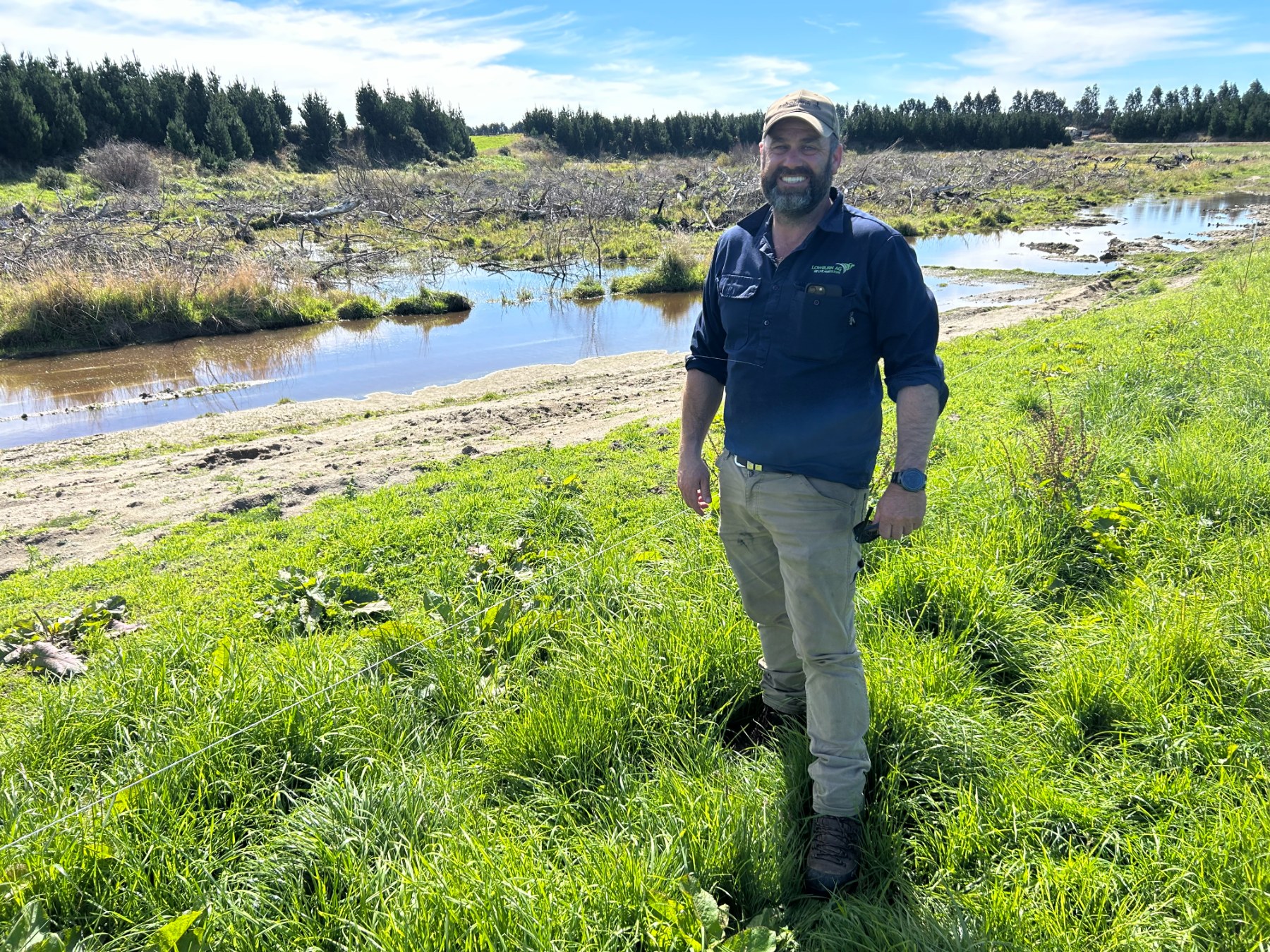
Jon Pemberton standing where he would expect the tide to level out at his wetland, on his Brydone property near Mataura. He's anticipating a total of 7.5ha of water by the end of August
“In contrast, New Zealand’s regulatory culture has historically preferred voluntary guidelines, long phase-in periods, and industry exemptions.”
Meanwhile, the United Kingdom provides a cautionary example, where farmers are effectively paid subsidies to farm differently rather than required to meet environmental standards, says Jon.
His report concludes with four specific proposals: establishing a land-grant-equivalent institution at Lincoln University, driving agricultural innovation; creating a national cost-share programme for on-farm freshwater works; resourcing and partnering catchment groups with professional co-ordination and independent science access; and committing to sector-neutral environmental regulation with no permanent agricultural exemptions.
A land-grant institution operates on a three-pronged mission: teaching (accessible agricultural and mechanical education), research (agricultural experiment stations) and extension.
Jon says personal growth and a broader outlook are two of the most valuable assets he’s come away with – and he is determined to keep working on positive change.
“Farming and clean water use are not mutually exclusive. The question is whether New Zealand has the institutional courage to build structures that make both possible.”
Jon's Nuffield research
Nuffield scholarships are awarded to exceptional agricultural or primary sector leaders to travel globally to research a specific topic and develop their leadership skills to benefit New Zealand’s food and fibre sector.
Jon Pemberton’s research focused on finding a better way to improve the water quality in freshwater catchments.
You can check out Jon’s full report here: