


Environmental wins lead to production rewards
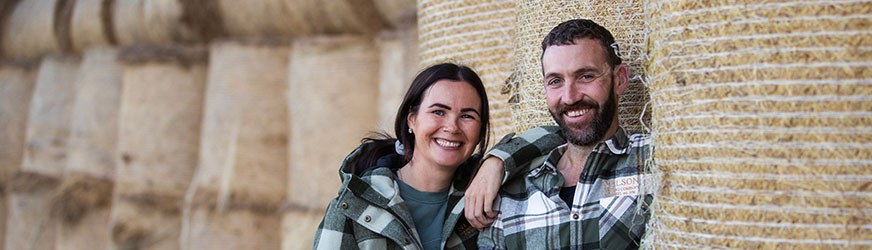
Christina Vaughan and Cam Nelson at the Nelson Farming Company property in Central Murihiku Southland.
Diving head-first into agriculture has seen Cam Nelson become one of Murihiku Southland’s farming leaders.
A Murihiku Southland born and bred farming lad, Cam has found his passion for farming and the results of his mahi are highly impressive.
Cam is not only at the helm of a highly productive farm, but one that is making an outstanding commitment to environmental progress and sustainability.
Cam instantly became one of Murihiku Southland’s environmental leaders when he and his family were crowned the Ballance Farm Environment Awards 2025 Southland Supreme winner, through their Nelson Farming Company.
With partner Christina Vaughan and parents Wally and Jan Nelson, the family took home the Beef + Lamb NZ Livestock Farm Award, Rabobank Agri-Business Management Award, and NZFET Biodiversity Award on a huge night in Invercargill.
Even after scooping three prizes, Cam admits that going on to take top honours and being crowned Southland’s supreme winner was a big surprise.
“It was a bit of a shock to be honest, we weren’t really expecting it.”
“Sarah Thorne from Thriving Southland encouraged us to have a go and we thought we would just see what happens.”
Once that initial shock wore off, the winning experience has been a great one for Cam.
“Going up to the national awards was an awesome experience, we have met a lot of great people and got a lot of new contacts.”
“The winner’s field day we had was a pretty intense, but it has been a great experience.”
Standing on the stage at the Ballance Farm Environment Awards wasn’t something Cam would have even considered ten years prior, when he started his apprenticeship as a diesel mechanic.
“I did ten years as a diesel mechanic; I did eight years here before two in Australia,” he says.
“When I came back from Aussie I worked on the farm and it sort of went from there.”
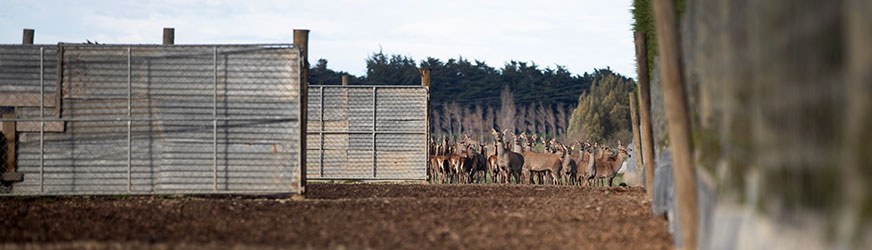
A herd of deer are on the lookout before being moved into the yards at the Nelsons’ farm.
The award judges were clearly highly impressed with the Nelson Farming Company’s practices and approach to farming.
One point noted was the Nelsons’ strong intergenerational thinking and support that was at the heart of their operation.
Wally still plays an integral role, with Cam suggesting that retirement is not something he is likely to ever consider.
Jan is also hands on, looking after the farm’s accounts.
The Nelson Farming Company runs an intensive operation with 1200 deer farmed on 164ha at Central Murihiku Southland.
Wally and Jan were sheep and beef farmers before the family operation was transitioned gradually into a highly productive deer farm.
“What we have found is that where we have made improvements that are good for the land or the environment, it is good for production and for the overall benefit of the farm”.
That intensity is at the heart of Cam’s passion for what he does and the success that he and the rest of his family have achieved.
“We do run an intensive operation, there aren’t too many holidays or days off so you have to love what you do”, he says.
“The other thing, too, is that you are always looking for areas you can improve in and ways to make the farm more efficient.”
The results of the awards judging process noted that continued improvement was at the core of the Nelson Farming Company’s success.
Whether it be genetics, winter grazing practices, or environmental areas, the Nelsons run a tight ship, both environmentally, as well as productively.
“What we have found is that where we have made improvements that are good for the land or the environment, it is good for production and for the overall benefit of the farm.”
“One example would be where we have had wet areas, the deer would get in there and wallow and make a real mess.”
“They’d drag it over good pasture, so we have fenced off a lot of wet areas and done a lot of planting.”
Riparian planting has been at the heart of the range of environmental improvements made on the farm, which include the establishment of sediment traps and measures to improve water flow on the property.
The Nelsons have also made significant advances in their winter grazing practices, which now include using a wintering shed and feed pads.
“With the work we do on the breeding side of it, it is great to see the results coming through.”
Judges noted biodiversity has been further supported through an ongoing planting programme, which includes replacing eucalyptus trees with native species, supported by the establishment of an on-farm nursery.
Judges praised the farm for maintaining a high level of production while keeping its environmental footprint to a minimum.
The Nelsons were also credited for their deep commitment to environmental sustainability.
Mahi to drive genetic improvements of their stock has been another area of consistent improvement noted by the award judges.
The Nelsons’ use of pinpoint genetic selection sees all stock DNA tested which supports those breeding choices.
“Dad started off with four hinds and now we have 1200 deer on the farm, Cam says.
“With the work we do on the breeding side of it, it is great to see the results coming through.”
“You love seeing the two-year-olds come through each year.”
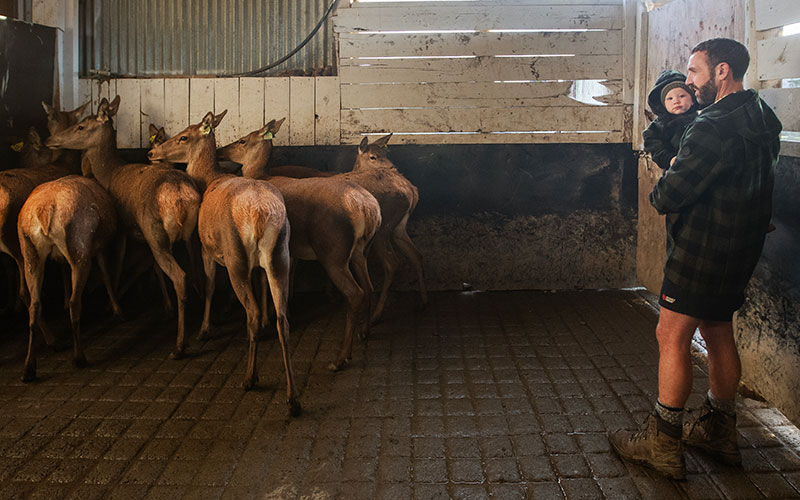
Cam Nelson assessing stock with son Eddie.


