


Holding the line
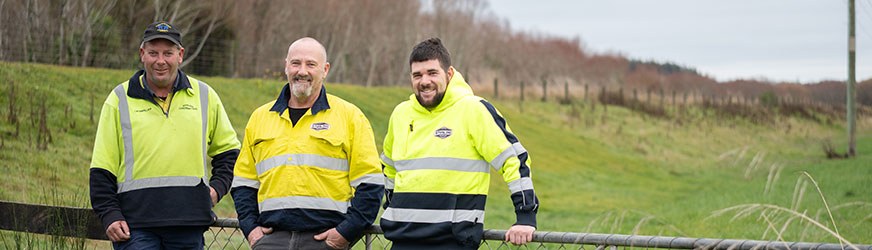
Shane (centre) works alongside his stepson Raymond Stirling (right) and Nathan Clarke (left), who has been with Stirling Contracting for 38 years. During the past year, they’ve been working to improve Environment Southland’s flood banks on the Aparima and Ōreti Rivers.
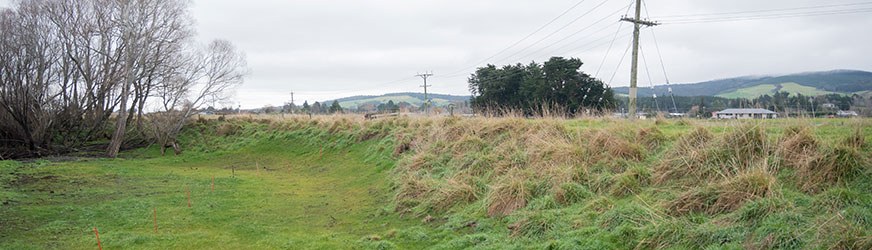
“There have been some big old macrocarpa trees that we’ve removed over the last six years. One had debris built up around it – you could see the makings of a potential disaster. The lack of grass cover around the tree didn’t help. That’s how it starts. The water starts pouring in, and next thing, you’ve got a weakened structure and it breaches. And all hell breaks loose.”
Experience and technical expertise are important, but so are relationships with landowners.
“The majority of the farmers we work with – we’ve known them for a long time and we have a good rapport with them,” Shane says.
“When we turn up back at their place, they’re more than willing and helpful in terms of getting the job done.”
That partnership extends to the quality of the work itself.
“We’ve had a few farmers where we’ve repaired flood banks on their place and they’ve been quite impressed with the product we’ve left behind. It basically just looked like a worked-up paddock, but it’s a flood bank – all re-grassed and easier to maintain. We’re also using a different type of grass seed now, a turf grass, which has more root structure in it.”
It’s hard, physical work – digging, cutting, repairing – but it’s not just about the tools.
“One day we could be fencing; the next day removing crack willow; the next week, doing some repair work,” Shane says. “We’re just doing what we do.”
In doing so, they’re making Murihiku Southland more resilient – even if not everyone sees it.
“Nobody really sees it, but we are making a difference,” Shane says.
“Just because they don’t live on the river doesn’t mean it’s not going to impact them. If there’s a flood and the flood banks aren’t in good shape, it’s going to impact everyone.”


