


Talking trash
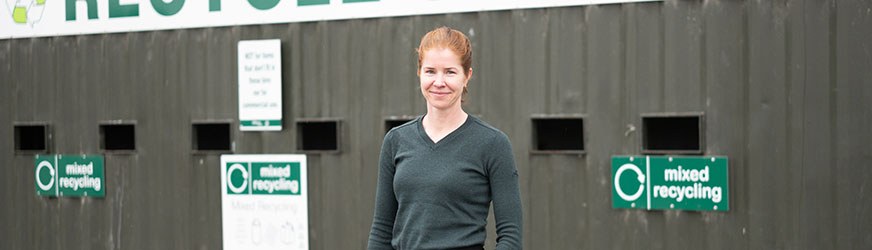
WasteNet Southand director Fiona Walker at the Wyndham Transfer Station.
When a young Fiona Walker read a children’s story about a rubbish dump, the concept was so intriguing her parents organised a family outing.
On the Tokoroa dairy farm where she was raised alongside three siblings, waste was dealt with in one of two ways – it was either burned or tipped into a dead-hole.
The dump was a revelation – all that household trash out in the open – green waste, food waste, packaging and bric-a- brac, along with furniture and whiteware which could have had a second life.
Fiona arrived in the south a decade or so later, with a freshly inked Bachelor of Environmental Management degree from Lincoln University, and firm ideas that people needed to improve their environmental footprint.
Her first job was at Fonterra’s Edendale Plant.
“Amongst other elements, Fonterra had a really strong directive around waste – looking at both diversion and some of the challenges.”
Reduce, recycle and always consider whole of life of the product. It was powerful messaging which resonated with her early experiences.
Fiona worked with the company in roles throughout New Zealand before returning south to raise a family and begin an environmental management consultancy in 2017.
“I saw this huge opportunity for positive change.”
In 2024 she took a sideways step, accepting a newly created role to head WasteNet Southland, which allowed her to continue her environmental focus while gaining an insight into governance and the workings of local government.
“The projects are both broad and exciting, from Aurora College in Invercargill with its closed loop kitchen gardening and recycling to the Te Hau O Te Ora Mataura using reusable incontinence products, to Enviroschools initiatives.”
The WasteNet office is in the Invercargill City Council building, but it is equally responsible to the Gore and Southland District Councils who set up the organisation in the early 2000s.
“We are quite unique – other councils may collaborate over waste management, but the Southland
councils are the only ones with a formal partnership arrangement.”
It has proven a successful model - offering avenues for cost efficiencies, economies of scale and consistent messaging across the region. Working in this manner has been paying off too.
This year’s bin inspection campaign – checking the contents of yellow recycling bins across Southland – has been a huge success.
Cross contamination with rubbish was impacting recycling, so the three strikes system was devised to check bins.
“You want the environment to be healthy because if the environment’s healthy then we get a bit healthier too. We’re all connected,” she says. “We can’t exclude ourselves from the environment and think we can live in a concrete place with no ecosystem. It doesn’t work.”
In the 2023-2024 year 944 tonnes of material in contaminated recycling bins were redirected to landfill, at an equivalent cost of $339,000 to ratepayers.
In the first phase, non-compliance was equally spread between the ‘don’t cares’ – people who were dumping dirty nappies and deer carcases in recycling bins – and the ‘don’t knows’ – people who were putting in soft plastics like plastic bags and clingwrap that can’t currently be recycled in kerbside yellow bins.
Overwhelming support from the community was encouraging – and rewarding.
Within two months, 92% of bins were getting green ticks, up from 80% at the first inspection. And that means we all win.
“One of the reasons we divert waste from landfill is because it’s becoming a more, and more expensive disposal method. So, one of the easiest ways to save money on waste disposal is to create less waste.”
That is challenging, because New Zealand’s population continues to grow.
WasteNet’s Community Waste Minimisation Fund grants money to community and individual projects across Southland that reduce waste.
They don’t specify what those projects might look like because they don’t want to limit what those projects might entail.
“The projects are both broad and exciting, from Aurora College in Invercargill with its closed loop kitchen gardening and recycling to the Te Hau O Te Ora Mataura using reusable incontinence products, to Enviroschools initiatives, says Fiona.
“Children are our future. They are just so much more aware, and they are the ones who pull the family into line.”
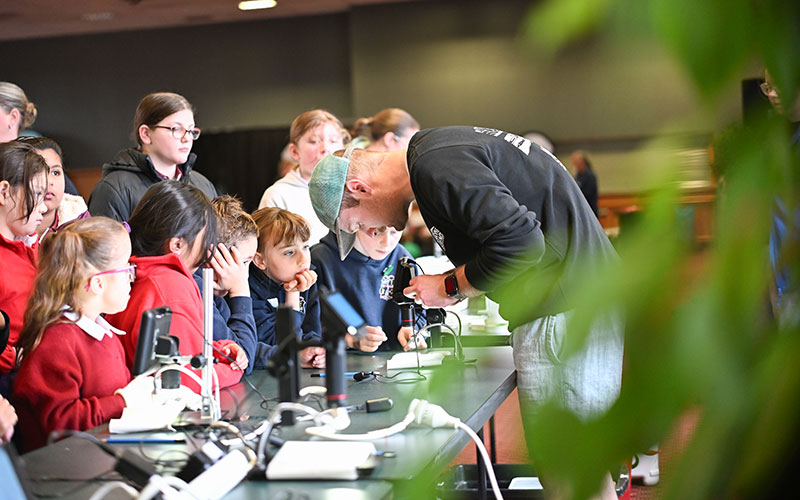
Tamariki at the waste reduction workshop in Invercargill.


